Gene Flow and Recent Lineage Colonization Constrain Genetic Differentiation Despite Local Adaptation
June 21, 2026
Yale Institute for Biospheric Studies
New Haven, Connecticut
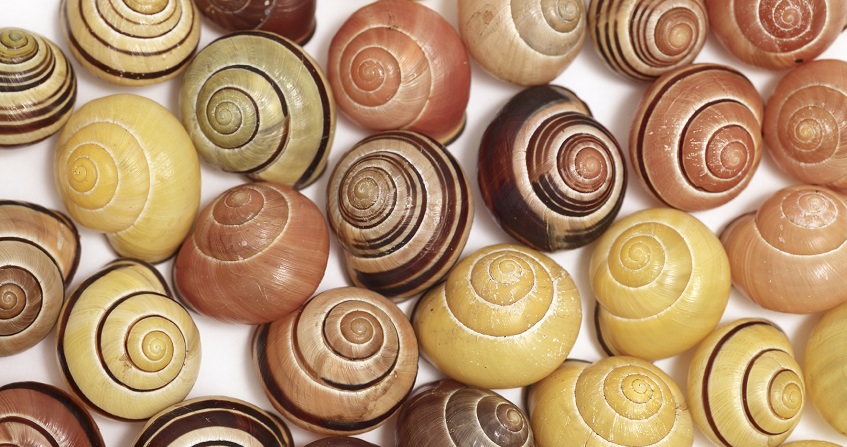
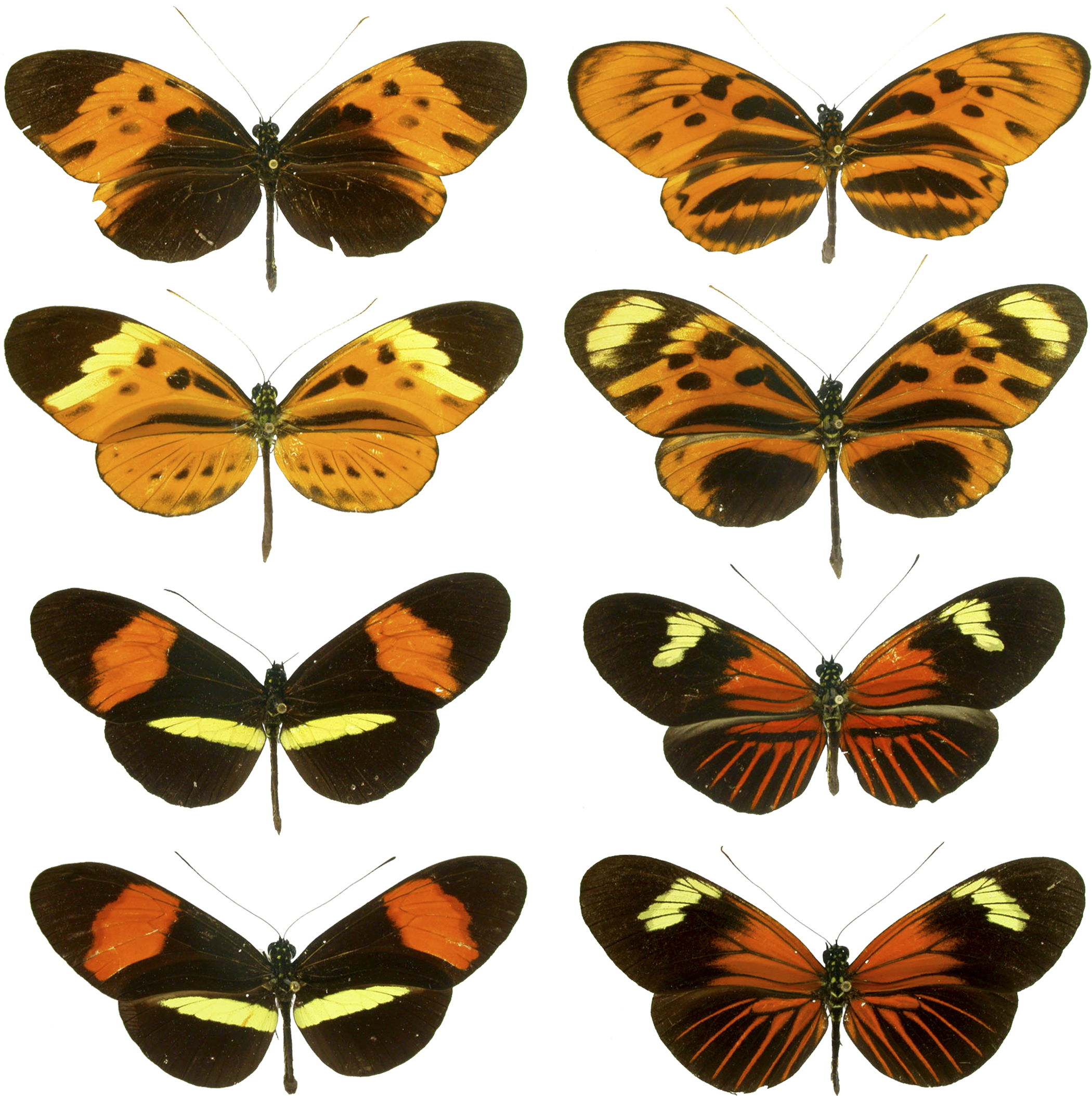
Polymorphism is widespread in nature
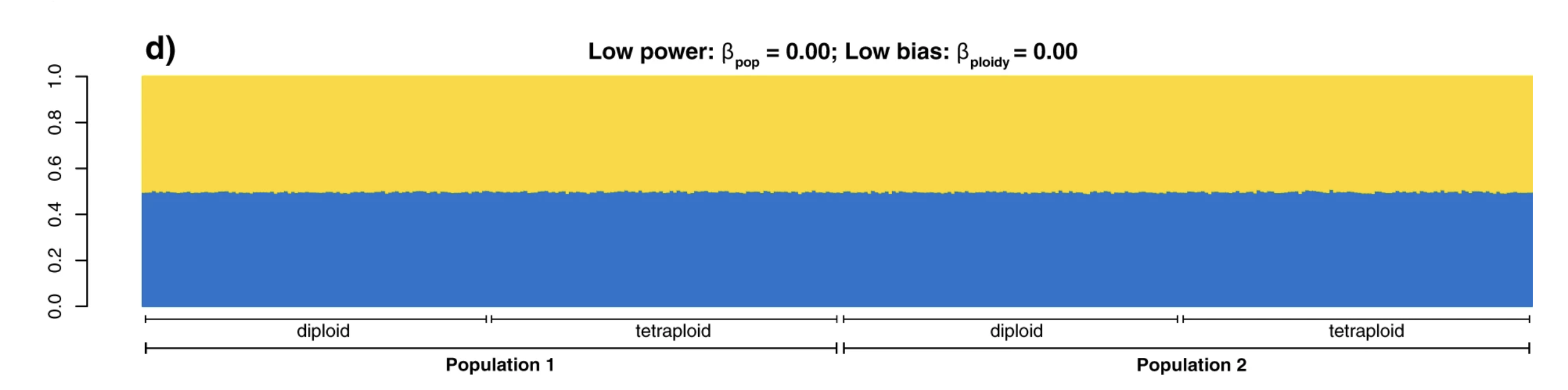
Common patterns of genetic structure
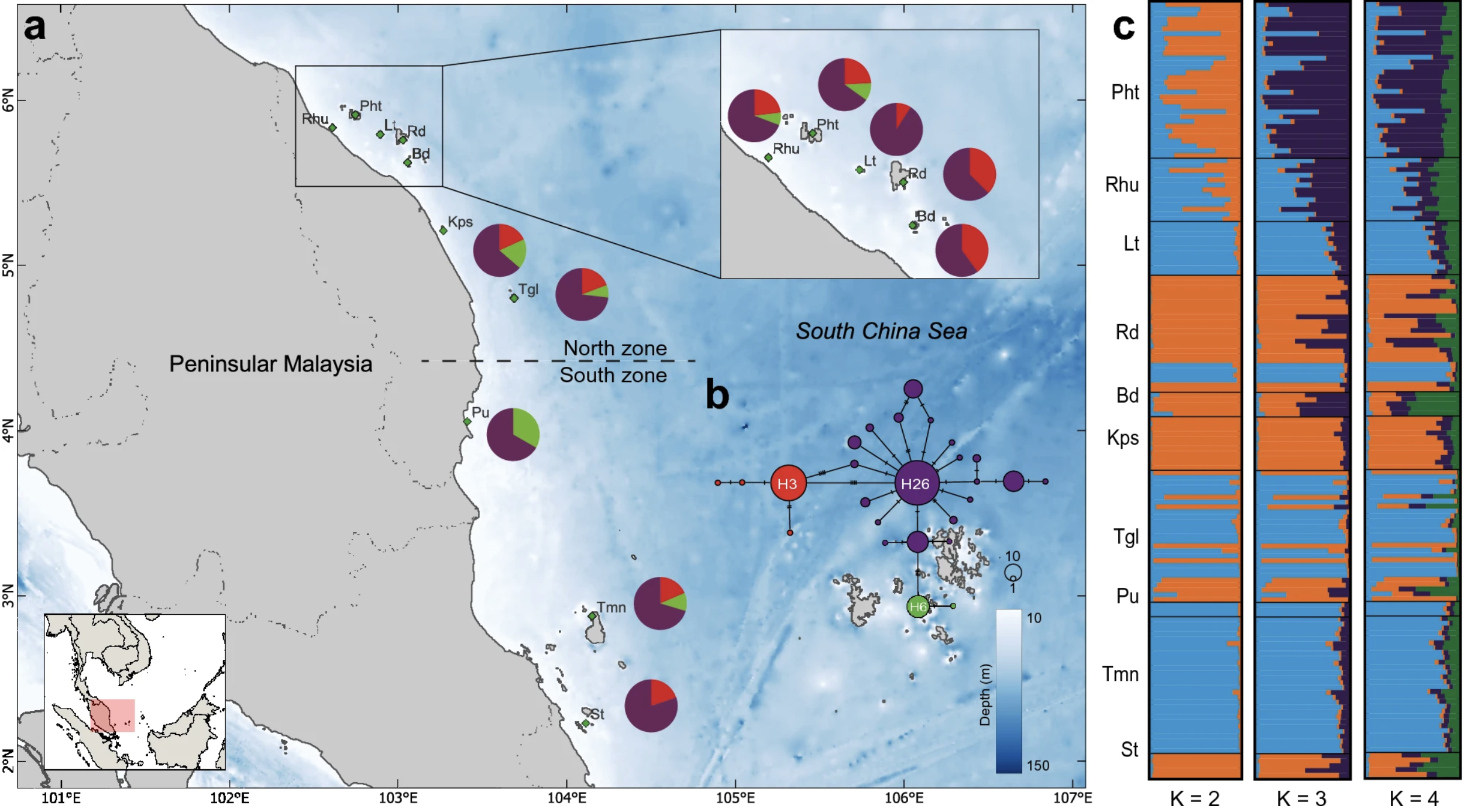
Common patterns of genetic structure
Selection-migration balance
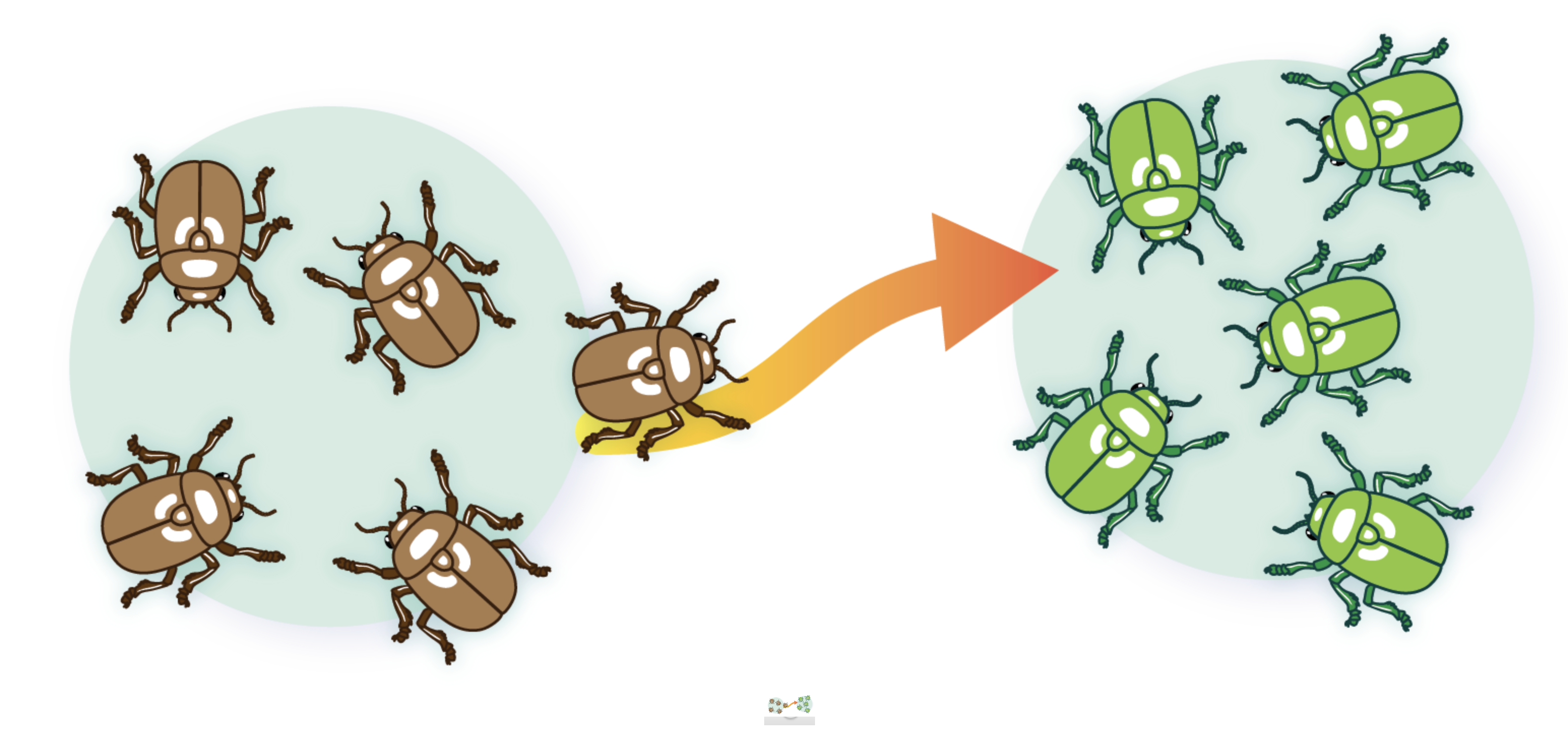
Colonization to new environments
Compelling system to examine these hypotheses
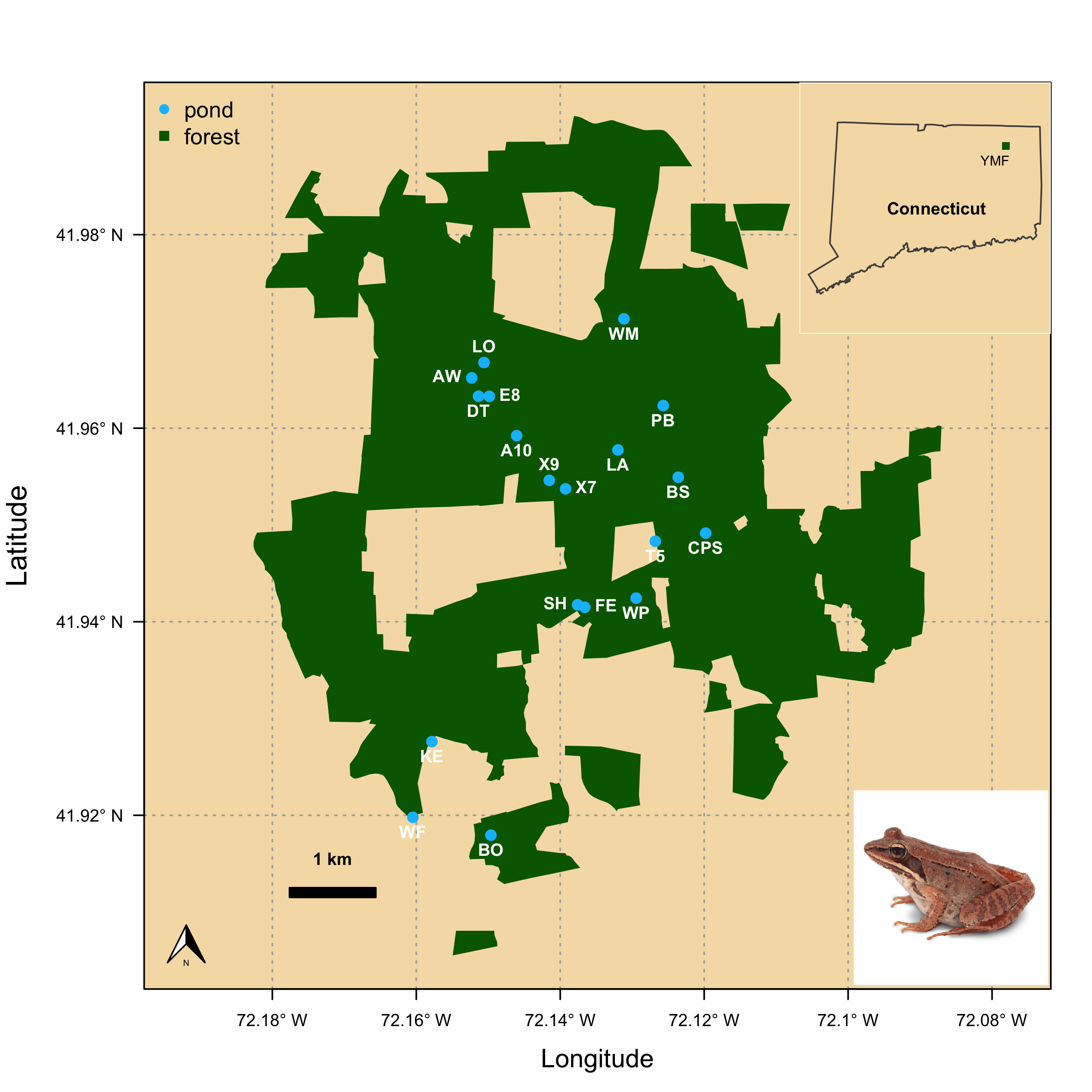
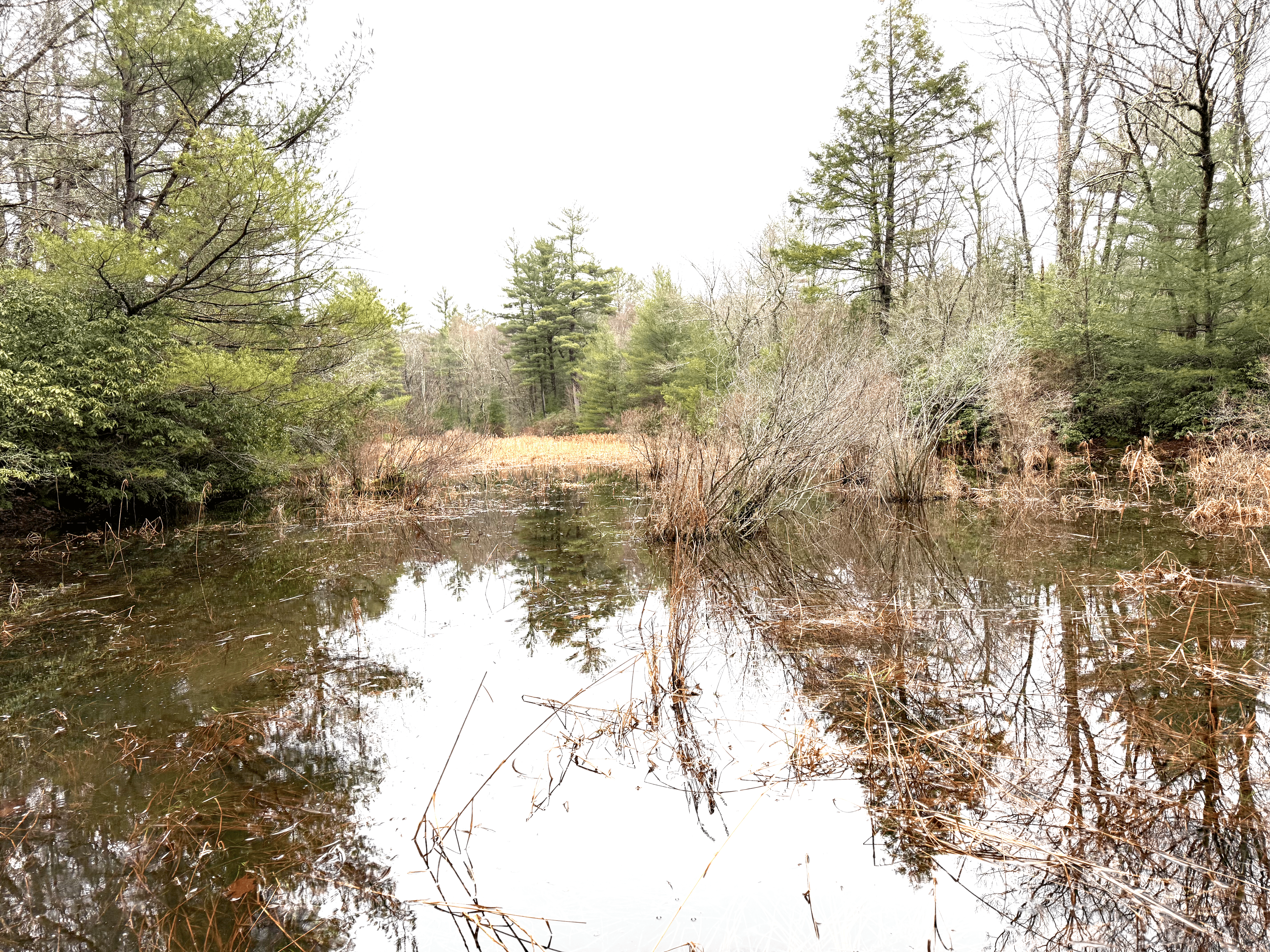
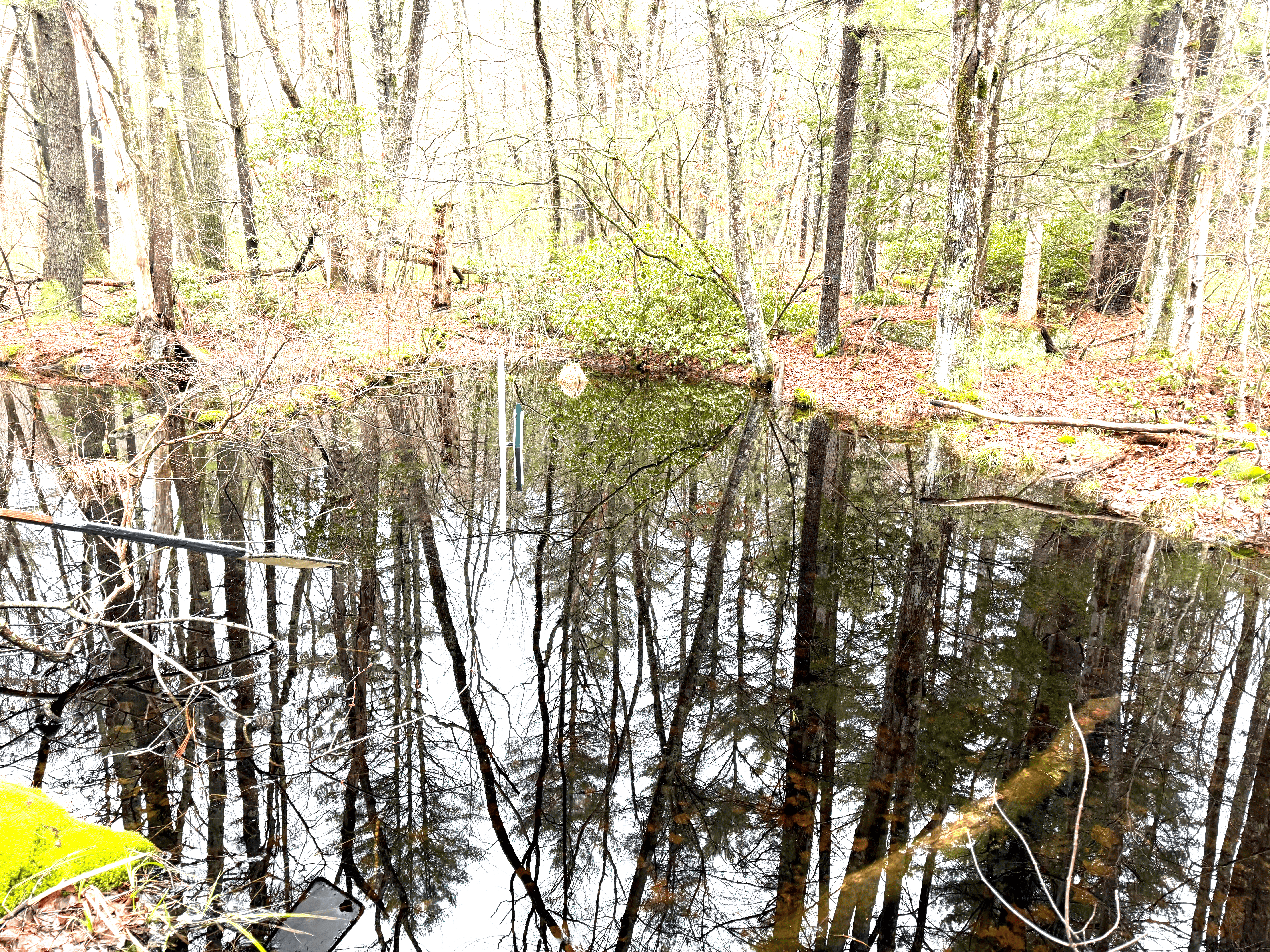
Compelling system to examine these hypotheses
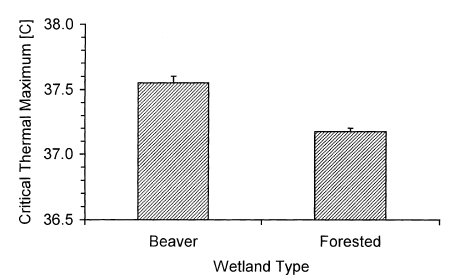
Skelly, 2000. Ecology Letters.
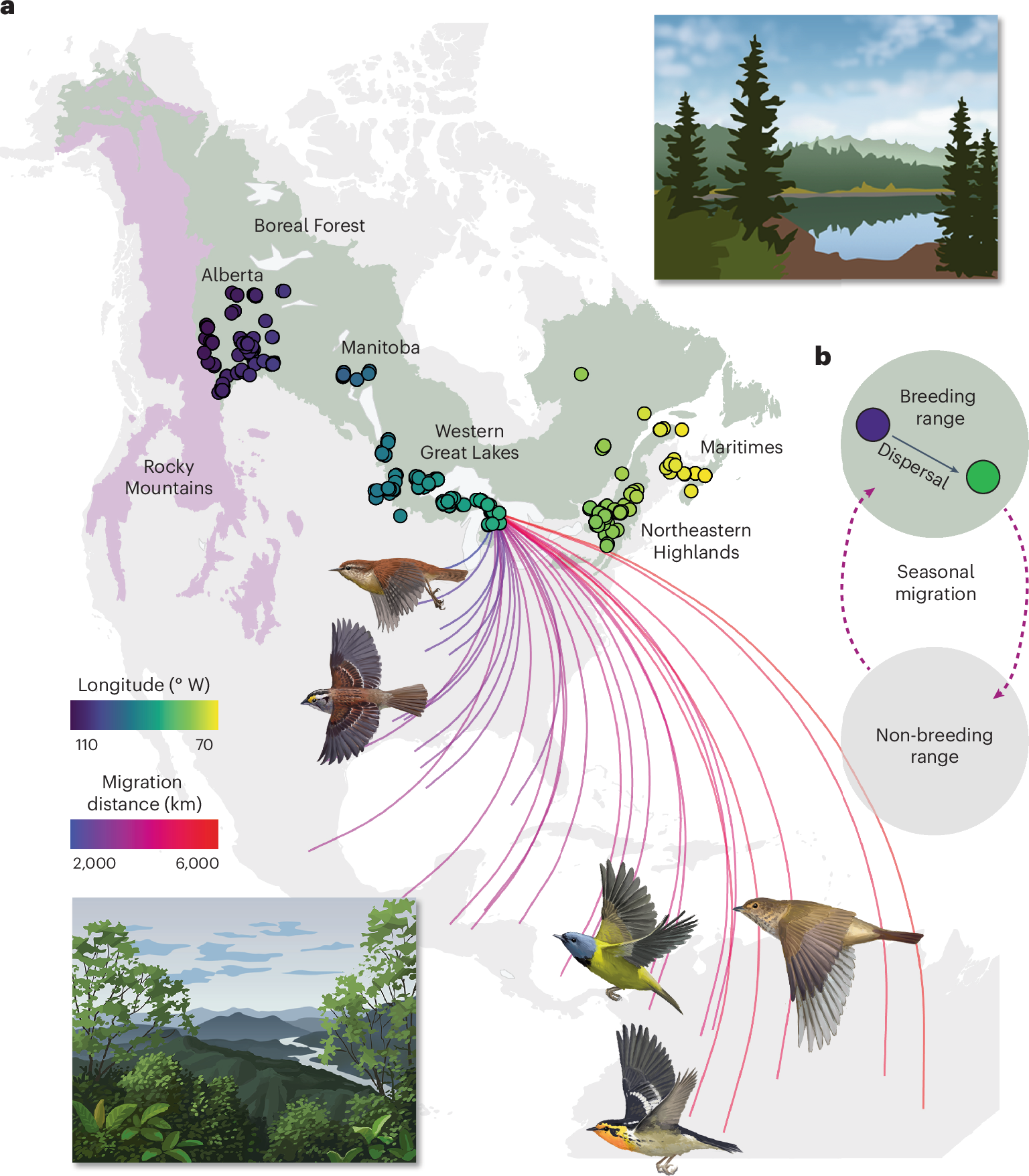
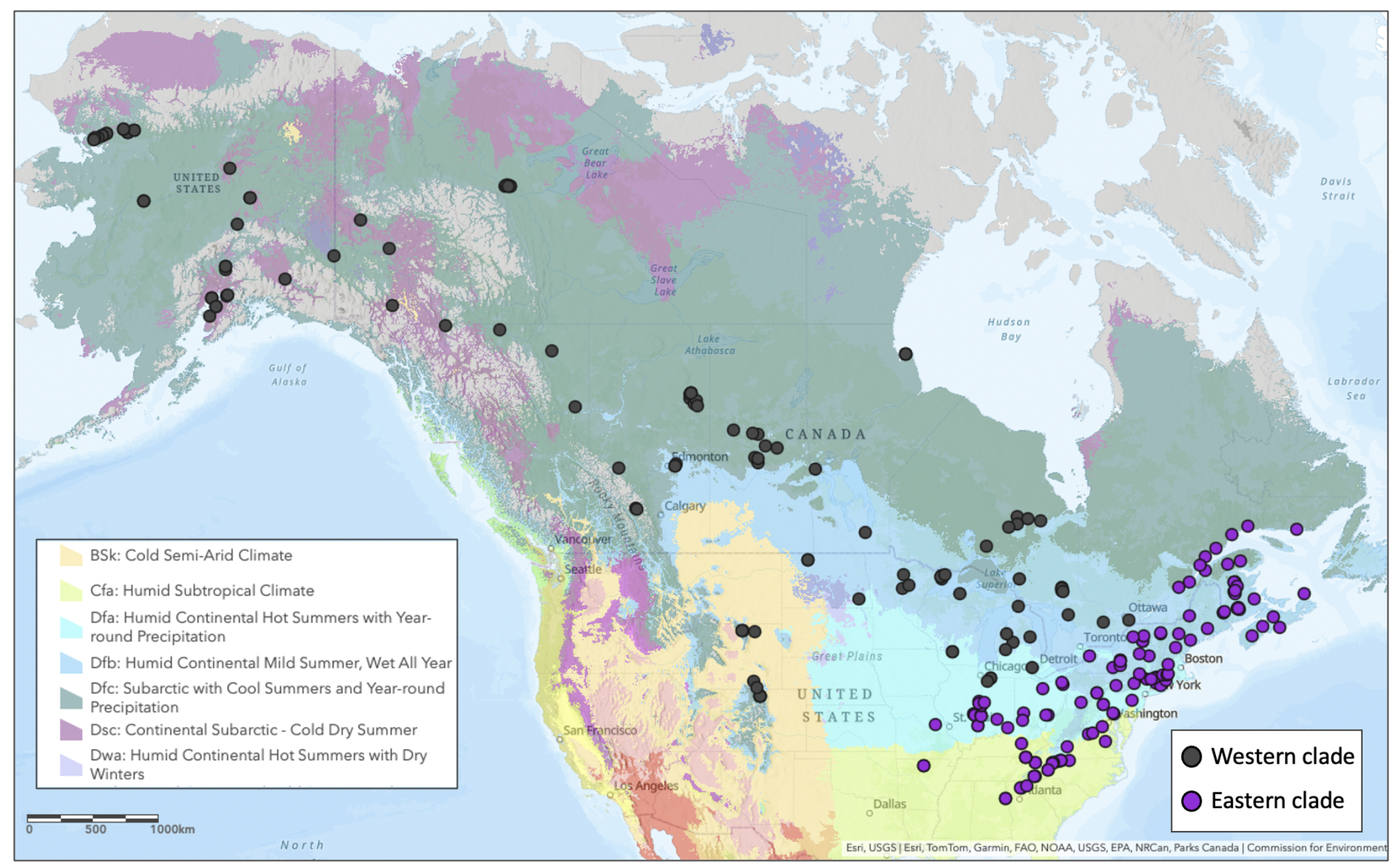
Range of wood frog
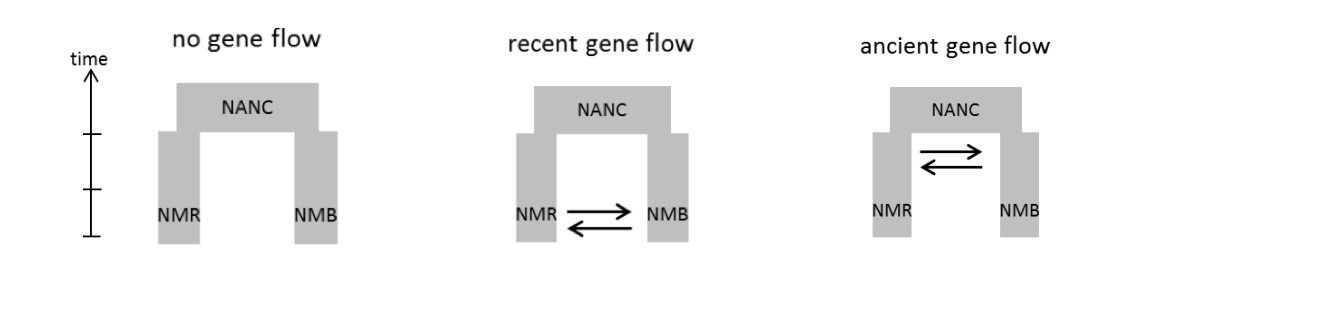
Demographic inference
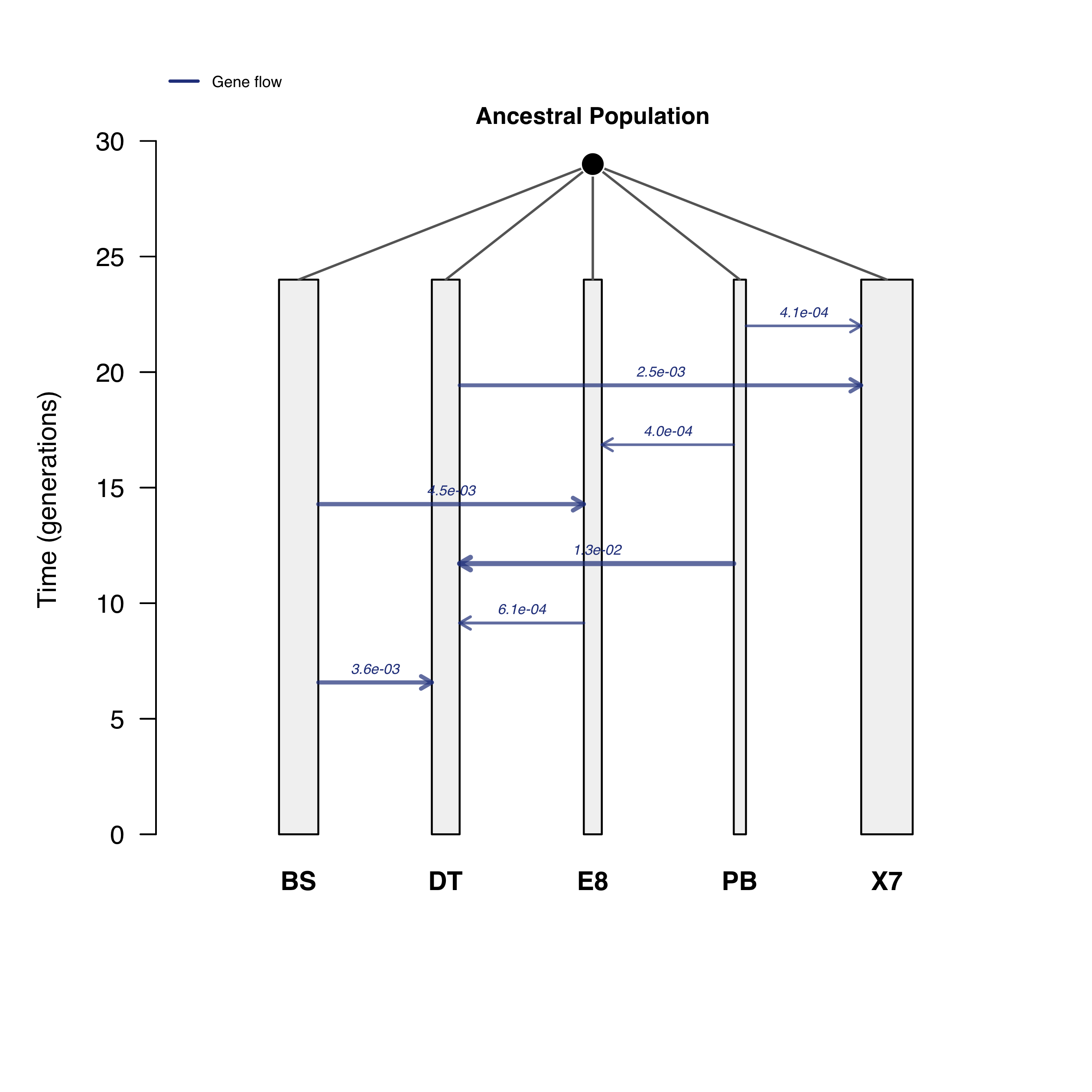
We inferred the demographic history of the wood frog by employing a composite likelihood approach using fastsimcoal2
Selection on phenotypes
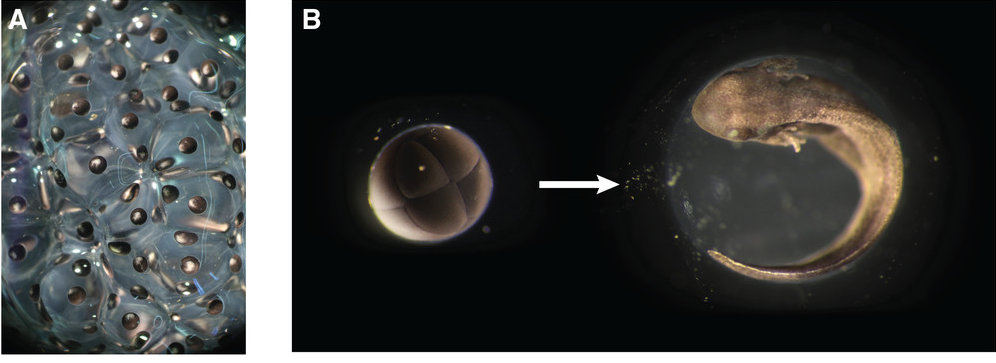
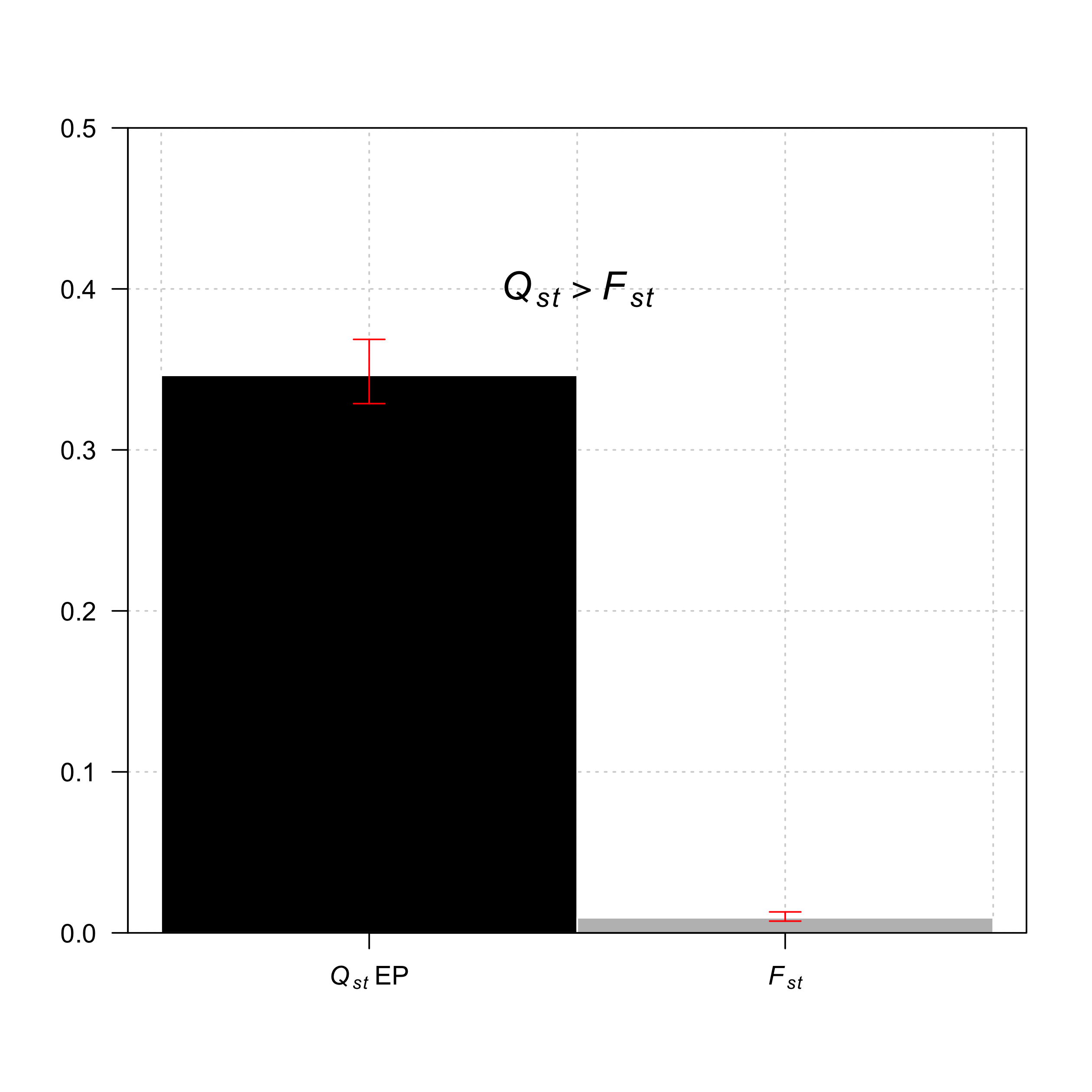
- We compared the divergence of a phenotypic trait such as embryonic development with the total genetic differentiation observed across populations of the wood frog (overall \(F_{st}\))
Selection on phenotypes
- This experimental designed enabled us to partition the total genetic variance for embryonic development into two main components: the variance among populations and the variance within populations
Selection on phenotypes
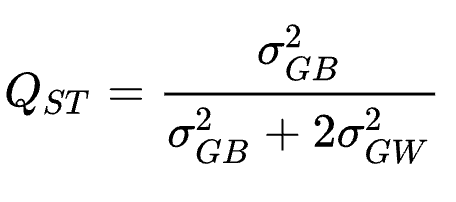
Where \(\sigma^2_{GB}\) represents the genetic variance among populations and \(\sigma^2_{GW}\) the additive genetic variance within populations
Populations of the wood frog are genetically homogeneous
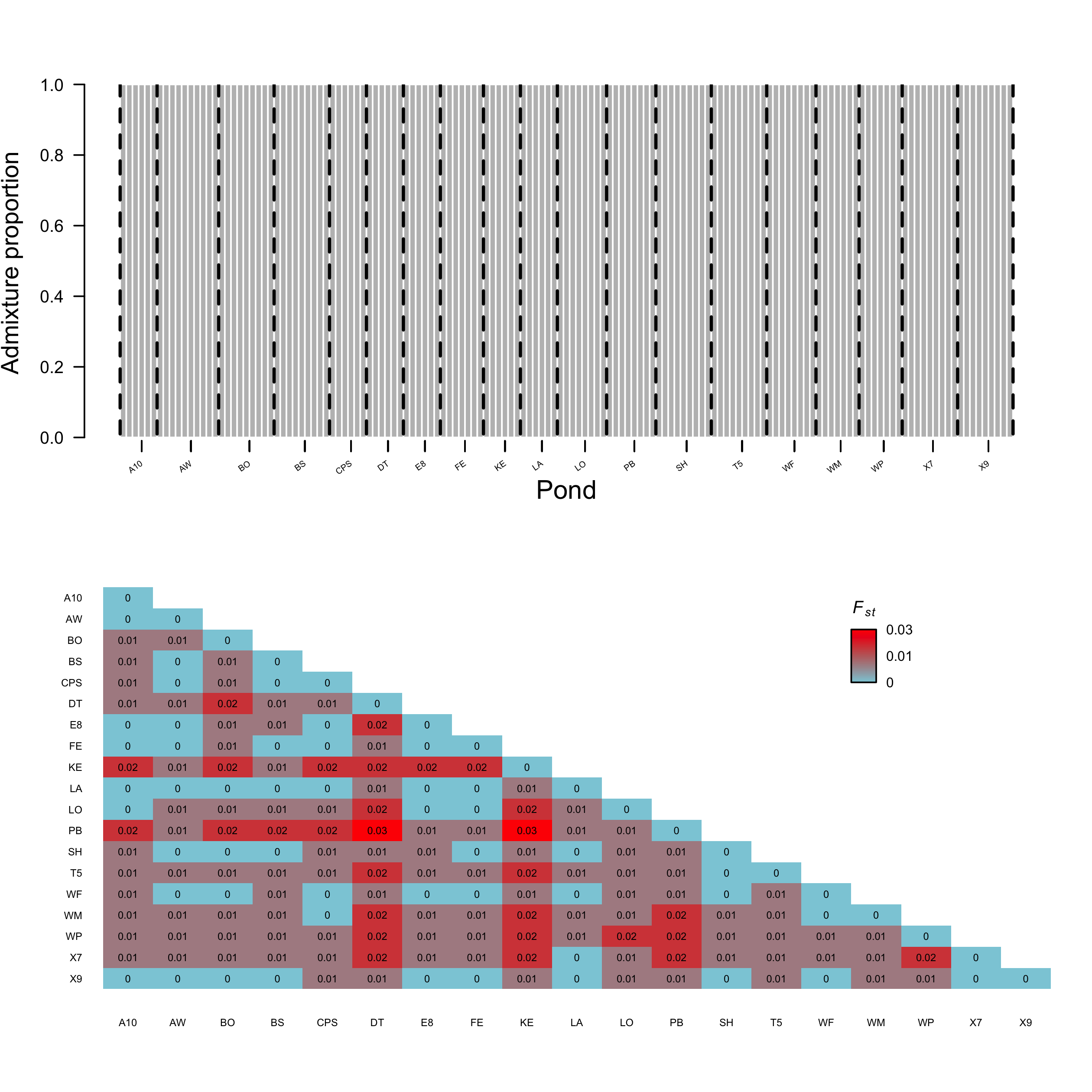
Recent divergence populations from a common ancestor approximately 24 generations ago
The genotype\(\times\)environment association analysis reveals two outlier loci:
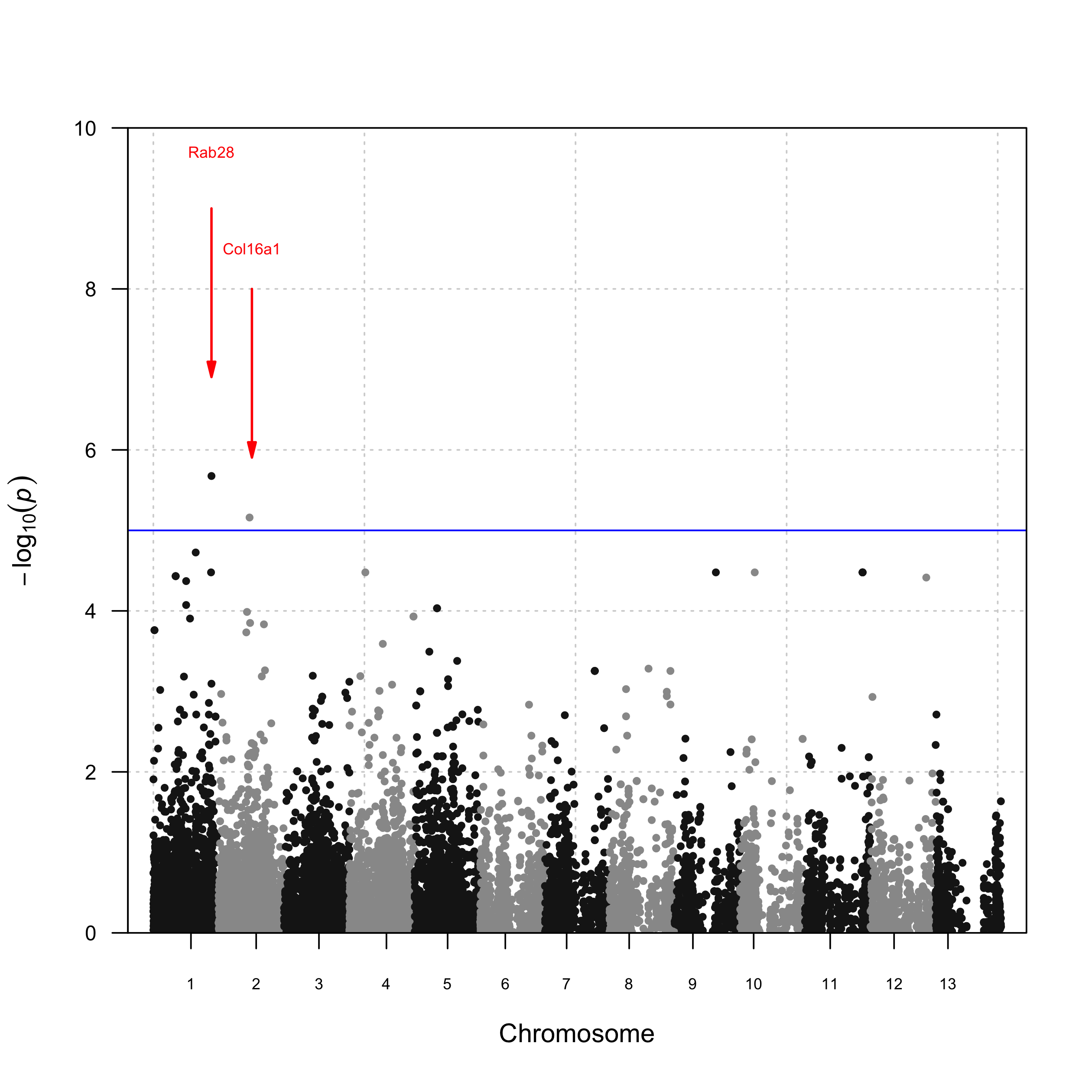
The genotype\(\times\)environment association analysis reveals two outlier loci:
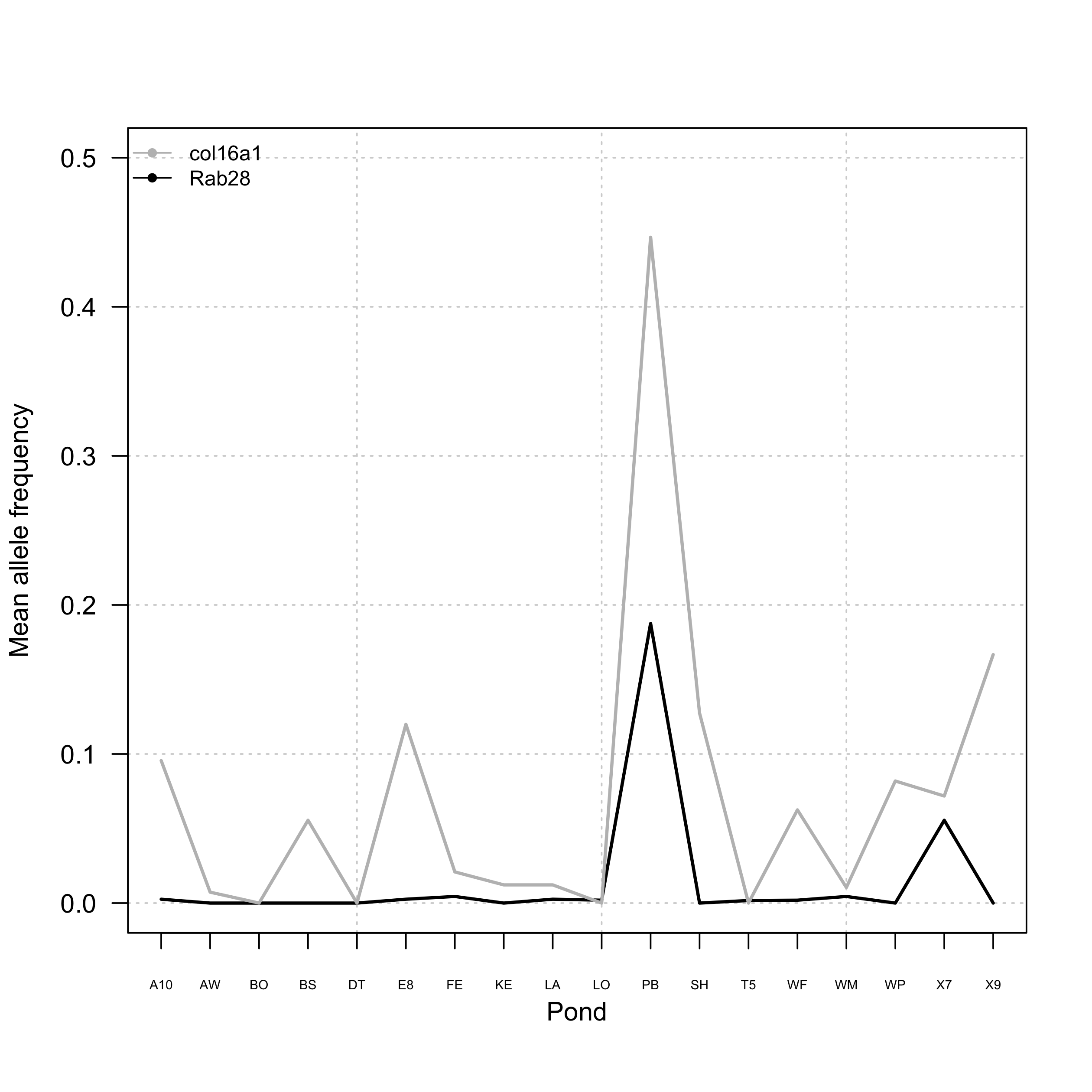
The genotype\(\times\)environment association analysis reveals two outlier loci:
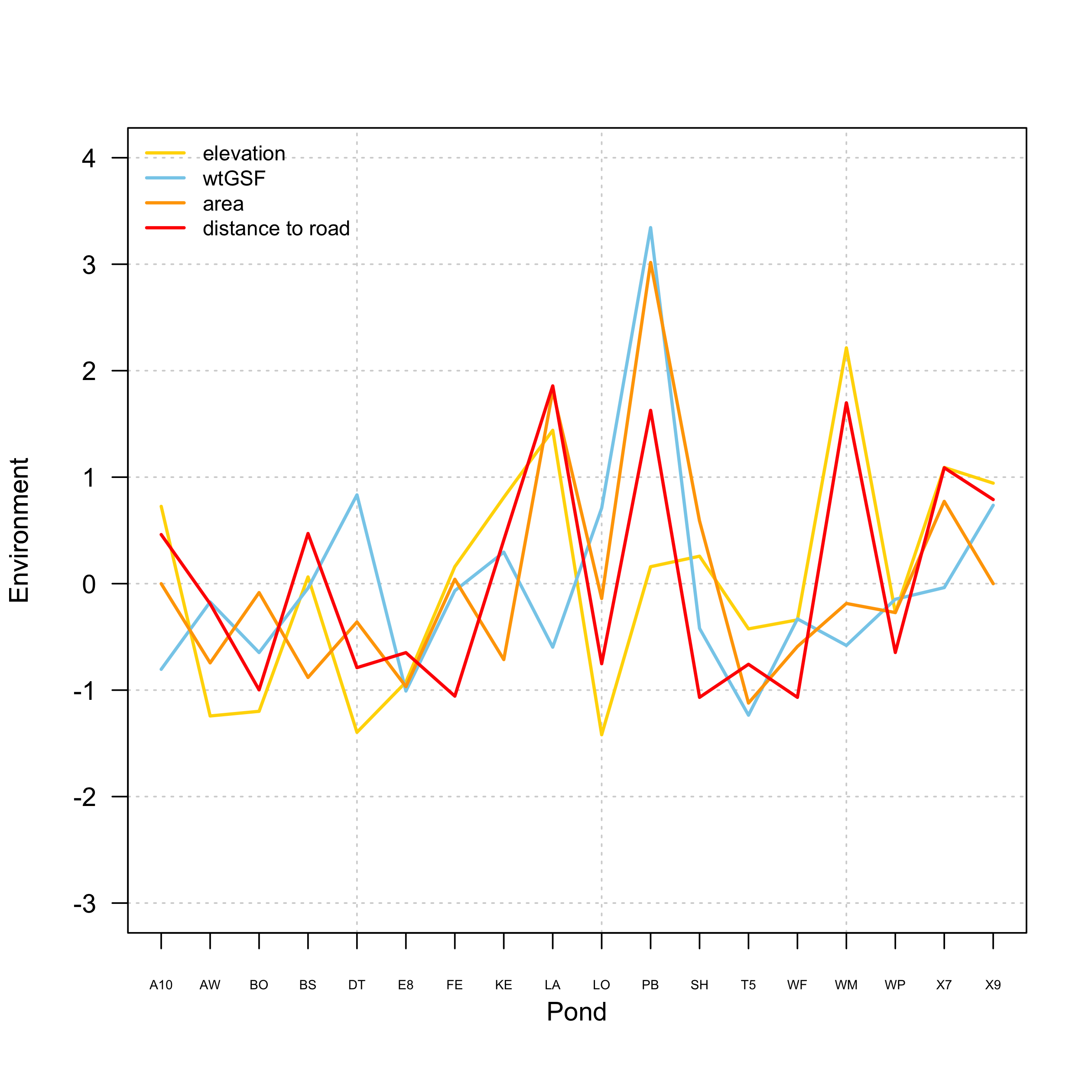
Significant signature of divergent selection
Concluding remarks
This genomic signature of selection together with a remarkable phenotypic differentiation strongly suggests that natural selection overcomes the power of genetic drift, even in a landscape characterized by a recent colonization and significant connectivity